
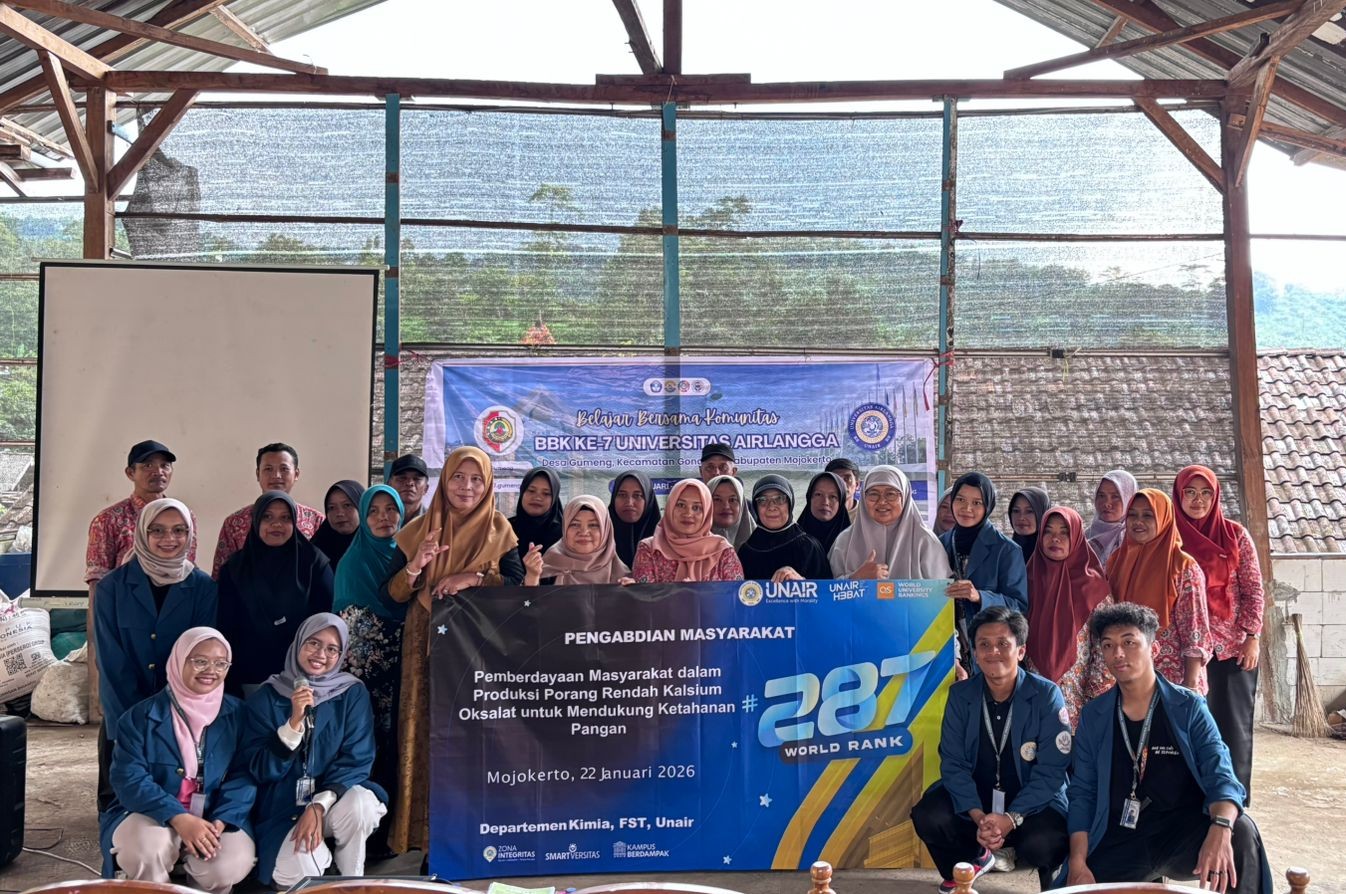
Mojokerto — The Department of Chemistry, Universitas Airlangga (Unair), conducted a community service activity entitled “Community Empowerment in the Production of Low Calcium Oxalate Porang to Support Food Security” on Thursday (22 January 2026) in Gumeng Village, Gondang District, Mojokerto Regency.
Gumeng Village is recognized as one of the regions producing porang tubers (Amorphophallus muelleri). To date, porang has generally been sold in the form of fresh tubers at a price of approximately IDR 10,000 per kilogram, resulting in relatively low economic value for farmers. Through this activity, the Unair lecturer team encouraged the community to process porang into value-added products, particularly porang flour, which has a significantly higher market value.
During the activity, Prof. Dr. Pratiwi Pudjiastuti, M.Si. explained various health benefits of porang tubers. Porang is known to be rich in glucomannan, a type of carbohydrate with a low glycemic index that is beneficial for helping regulate blood glucose levels. Its high dietary fiber content also plays a role in maintaining digestive health and supporting weight management. In addition, porang contains antioxidant compounds in the form of polyphenols that can enhance immune function. Oligosaccharides found in porang are also reported to have the potential to protect the body from infections and reduce the risk of allergies.
However, porang tubers cannot be consumed directly as they contain a relatively high level of calcium oxalate, ranging from approximately 0.19–0.25 percent. This compound may cause itching and irritation of the skin and throat and poses a risk of kidney stone formation if consumed over a prolonged period without proper processing.
On the same occasion, Prof. Dr. Muji Harsini, M.Si. presented a simple and safe technique for reducing calcium oxalate content in porang tubers based on food chemistry principles, which can be applied at the household and MSME scales. The process begins with selecting fresh porang tubers, followed by washing, peeling, and slicing them thinly to a thickness of 2–3 millimeters. The slices are then soaked in a 3 percent salt solution for two hours, followed by soaking in a 0.5–1 percent citric acid solution for 30–45 minutes. After rinsing with clean water, the porang slices are boiled for 15–20 minutes, drained, and dried using an oven at a temperature of 50–60 degrees Celsius or by sun drying.
Through this process, dried porang chips that are safe for consumption are produced. These chips can be directly processed into porang chips or further milled to produce porang flour. Porang products that have undergone calcium oxalate reduction possess higher economic value and can be processed into various alternative food products, such as porang rice, noodles, chips, and other processed foods.
Through this community service activity, it is expected that the residents of Gumeng Village will not only sell porang as a raw commodity but will also be able to develop processed porang products that are safe, healthy, and economically valuable, thereby contributing to the improvement of community welfare and local food security.

