
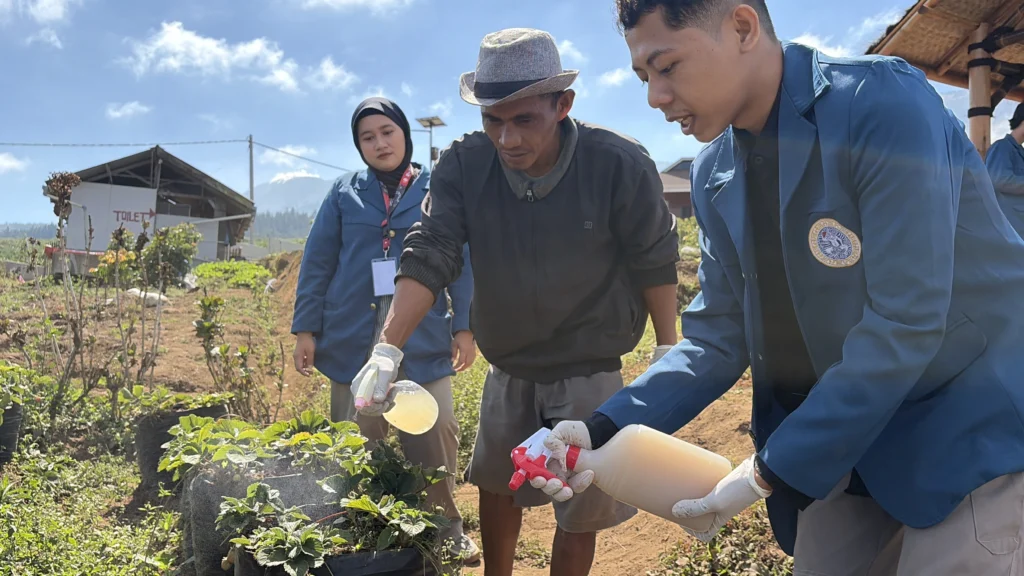
UNAIR NEWS – The Chemistry Student Association (Himaki) of Universitas Airlangga (UNAIR) has once again demonstrated its commitment to creating a positive impact on society. Through its community service program held from Sunday to Tuesday (July 19–21, 2026), Himaki UNAIR initiated the development of a natural biopesticide made from apple and lemongrass extracts. This innovation, named STROCARE, was introduced to support the management of a strawberry farm in Batu City, which is independently operated by beneficiaries of a disability foundation for people with mental health disorders (ODGJ).
Addressing Agricultural Challenges and Partner Needs
This initiative originated from the students’ aspiration to make a tangible contribution to the agricultural sector and local enterprises. The strawberry farm in Batu City is fully managed by beneficiaries from a disability foundation in Sidoarjo who have successfully passed an emotional stability assessment.
However, the farm managers often face serious challenges due to extreme weather conditions. A representative of the Himaki UNAIR team explained the difficulties encountered by the farm managers. “The biggest struggle occurs during the rainy season or weather like this. Fungal diseases and pests frequently attack their strawberry farm. During our interview, they expressed their desire to reduce their dependence on synthetic pesticides so they could produce their own pesticides and lower operational costs,” said Yoga, a representative of the Himaki UNAIR team.
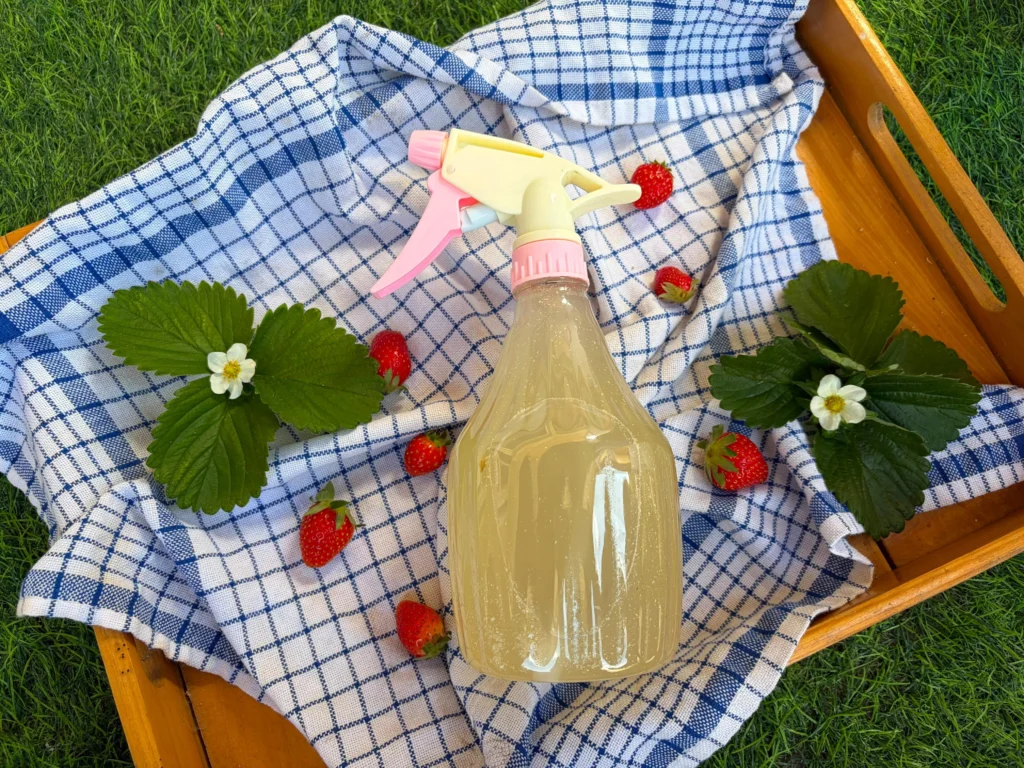
After observing the significant decline in the farmers’ income caused by pest infestations, the Himaki UNAIR team was motivated to provide an integrated solution through an affordable and environmentally friendly biopesticide.
Chemistry-Based Research: The Combination of Apples and Lemongrass
The formulation process of STROCARE began with extensive research on bioactive compounds capable of preventing pest and fungal attacks. “We first studied which compounds are commonly used to repel pests and fungi. We found that apples are rich in flavonoids, tannins, and polyphenols, while lemongrass contains citronellal and geraniol, which are highly effective in controlling pests and fungal diseases,” he explained.
Before being implemented directly in the field, the formulation underwent several stages of independent testing. The team evaluated its effectiveness on strawberry seedlings and measured the product’s acidity (pH) to ensure its suitability. “We sprayed our formulation, and it worked. The fungal infection disappeared, and the strawberry plants remained healthy. Its pH also met the standard for common pesticides, which is approximately 5.7,” he added.
The Advantages of an Environmentally Friendly Biopesticide
In addition to reducing the farm’s operational costs, STROCARE offers significant advantages in terms of soil sustainability and ecosystem preservation. “Synthetic pesticides contain chemicals that can damage soil structure and reduce soil nutrients. In contrast, our biopesticide is made from natural ingredients, can be biodegraded by soil microorganisms, and even helps improve soil fertility,” he explained.
During the implementation of the program, the Himaki UNAIR team also recognized the importance of providing continuous education to the farm managers. “They responded very positively and were enthusiastic about the innovation. However, to ensure they fully understand the production process, we plan to revisit the farm and provide them with a guidebook so they can continue producing this biopesticide independently,” he said.
Author: Fauziah Laili Romadhon
Editor: Ragil Kukuh Imanto
This article is republished from the Universitas Airlangga (UNAIR) News website and has been adapted for publication on the Chemistry UNAIR website.
Original Source: “Combating Strawberry Pests, Himaki UNAIR Develops STROCARE Biopesticide from Apples and Lemongrass”

